When your API goes down, the engineer on call hears first.
Sentivel checks your endpoints and pages whoever is on call until someone answers, by text and phone call on Pro. Your status page tells customers while they work on the fix.
- Free for 10 monitors
- No card
- Data stored in the EU
incidents
SentivelAPPYesterday at 16:48
Checkout has recovered
Acme
status.acme.dev
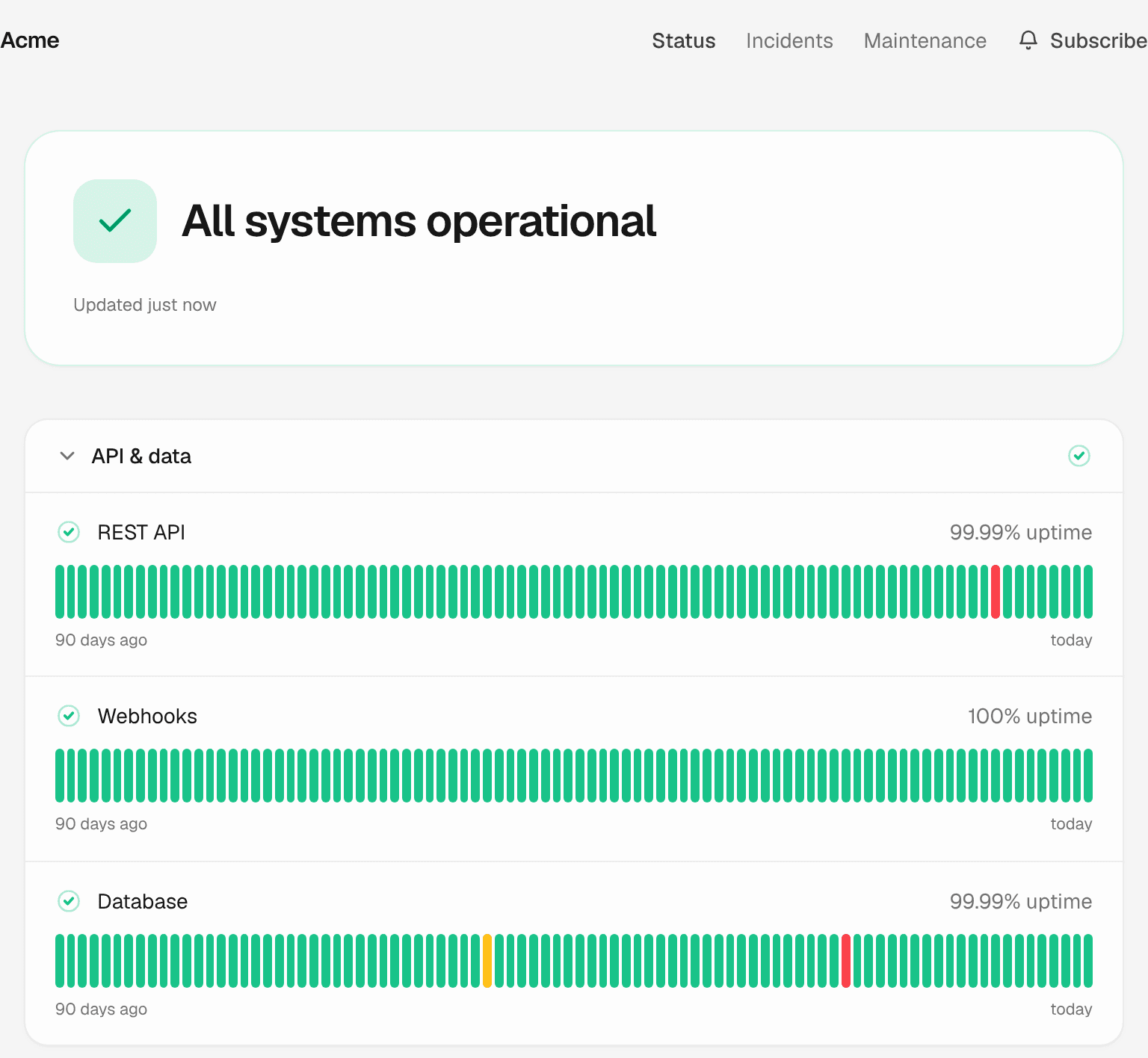
All systems operational
Updated just now
A demo outage. Nothing real is checked.
Right now we are watching 56 providers your product might run on. See them all
Stripe
Operational
Amazon Web Services
Major outage
Cloudflare
Major outage
Vercel
Operational
GitHub
Operational
OpenAI
Operational
Supabase
Operational
Twilio
Degraded
Google Cloud
Operational
Slack
Operational
Datadog
Operational
Anthropic
Operational
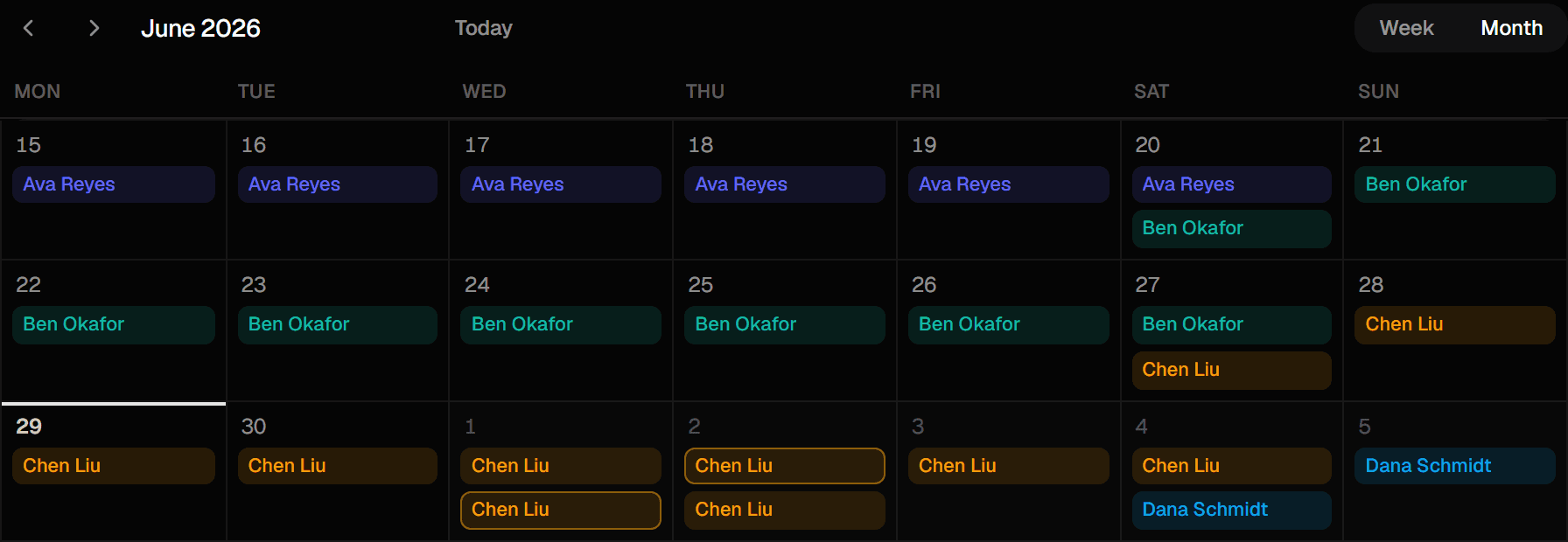
On-call
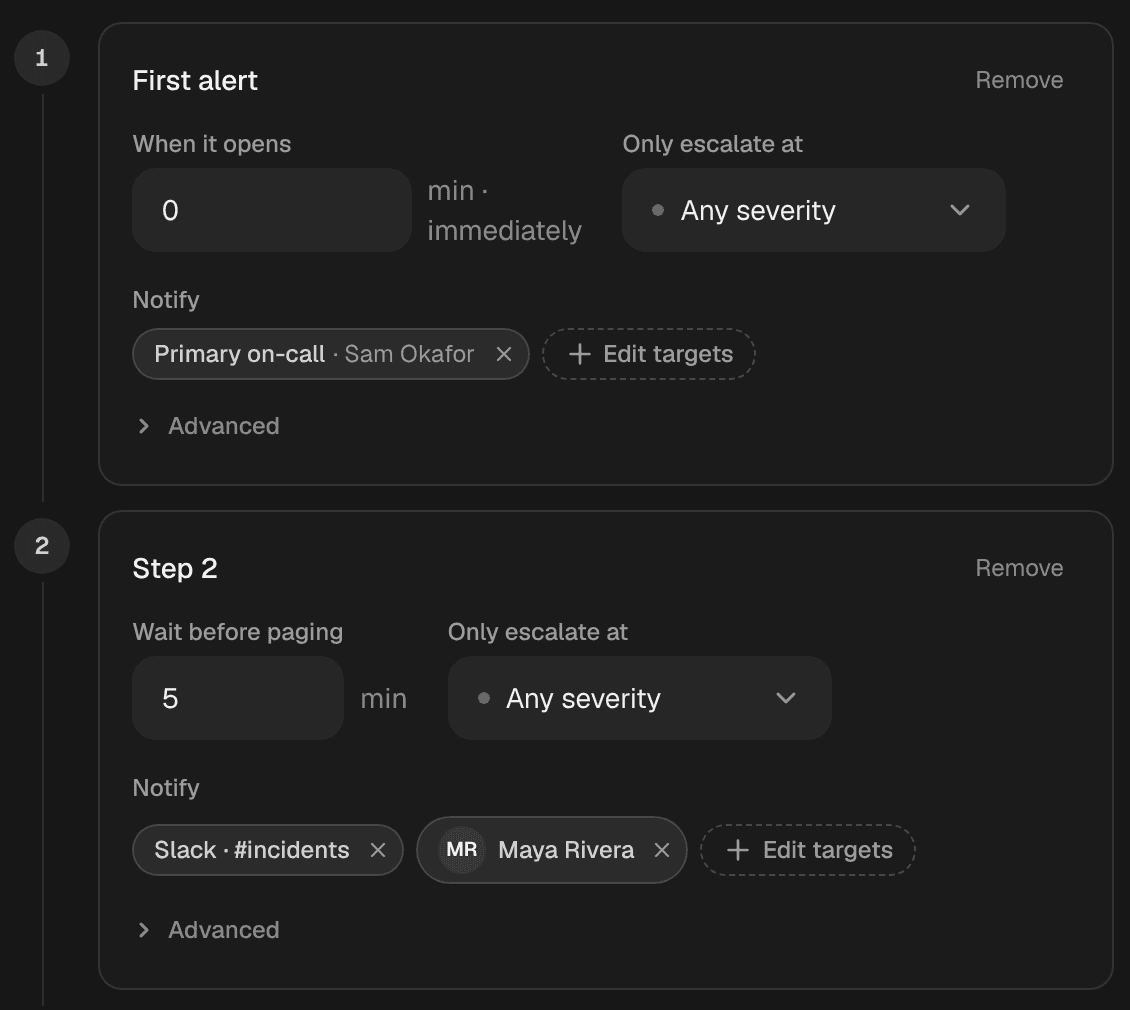
Page one person. Call the next if nobody answers.
When a check fails, whoever is on call gets a text with an acknowledge link. If nobody acknowledges, the next step pages again, by phone if you like, and asks them to press 1. The ladder stops the moment someone acknowledges.
Text and phone paging
On Pro and above, to numbers verified before they are ever called.
Email, Slack, Discord and Teams
On every plan.
Webhooks
The same alert, into your own tooling.
Your rotation in your calendar
Each schedule has a feed for Google Calendar or Outlook.
Friday 16 October
3:12
Messages
now
Sentivel
Sentivel: API is down: returning HTTP 503
Acknowledge: sentivel.com/incidents/…/ack
Status pages
Customers read the status page before they write to support.
Each monitor drives a component. When an outage is confirmed the component changes and an incident opens on the page. You write the updates, and every subscriber gets each one by email.
On your own domain
Point status.yourcompany.com at us on any plan. HTTPS is set up for you.
Subscribers
Customers sign up by email and hear about each update.
Up when we are not
Served from an edge cache, with a copy on separate infrastructure at mirror.sentivel.com, refreshed every 15 minutes.
Private pages
Put an internal page behind a password for your own team.
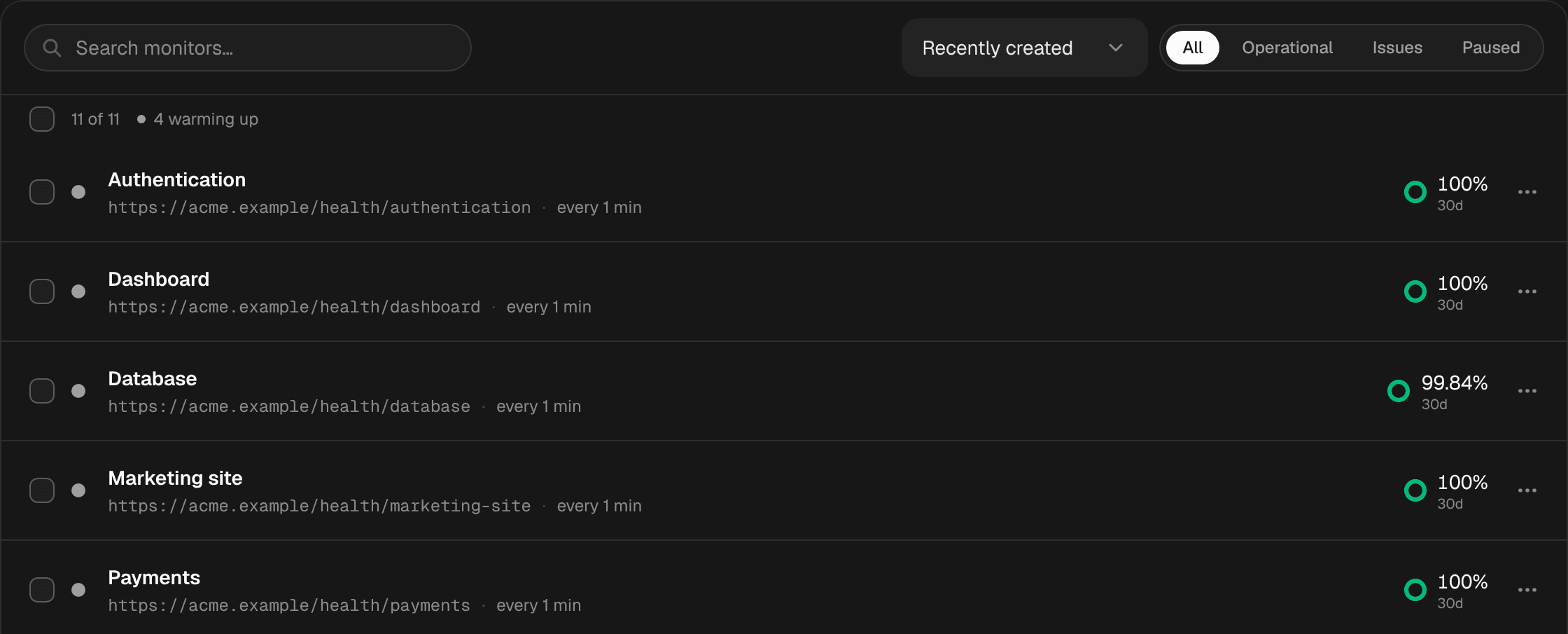
Uptime checks
Every minute on Pro, confirmed from another region.
A failed check is tried again at once. On Pro it then has to fail from a majority of regions before an incident opens, so one region’s bad network never wakes anybody.
| Plan | Checks | Regions |
|---|---|---|
| Free | every 5 minutes | One, with a retry |
| Solo | every 2 minutes | One, with a retry |
| Pro | every minute | Several, majority vote |
Retried before it counts
A blip that recovers on the retry stays a blip.
A majority of regions must agree
A region whose own network fails is left out of the vote.
More than HTTP
Keyword and JSON checks, TCP ports, DNS records, and heartbeats for cron jobs and workers.
Provider advisories
When Stripe breaks, say it’s Stripe.
Tell Sentivel which parts of your product run on which providers. When one of them has an incident, your status page names it and says what may be affected. When they recover, the advisory comes down by itself.
For example, Acme’s map
- CheckoutStripe
- APIAWS us-east-1
- Sign-inSupabase
- AI assistantOpenAI
Some services may be affected
We're aware of an ongoing issue with Stripe, a service we rely on. Some functionality may be affected until it's resolved.
Written by Sentivel, word for word. You can replace it with your own. See every provider we follow
Moving over
Already on Statuspage, Better Stack or incident.io?
Instatus pages import the same way as Statuspage.
Atlassian Statuspage
Compare the twoComes over: Components, incident history and email subscribers.
Connect with a Statuspage API key and import from the dashboard. Then add monitors, so the page updates without anyone editing it.
Better Stack
Compare the twoComes over: Your monitors.
Paste the URLs, one per line, and each becomes a monitor. Rebuild the escalation ladder, then point your status page’s CNAME at us.
incident.io
Comes over: Your alert sources.
Sentivel runs the uptime checks itself. Anything else that raises alerts can open incidents through an inbound webhook.
Pricing
Start free. Pay when you need faster checks and phone paging.
Free
$0forever
Monitoring and a status page.
- 10 monitors, every 5 minutes
- 1 status page on your domain
- Dependency tracking and advisories
- Email, Slack & Discord alerts
- 90 days of history
- 1 responder seat
Pro
$23a month, billed yearly
On-call schedules and phone paging.
- 25 on-call schedules & escalation policies
- Phone & SMS paging
- Multi-region consensus
- AI-drafted incident updates
- 50 monitors, every minute
- 3 responder seats, then $10 a month each
Business
$99a month, billed yearly
White-label pages at higher limits.
- Remove Sentivel branding
- 250 monitors, every minute
- 25 status pages
- 25,000 subscribers
- 2 years of history
- 15 responder seats, then $10 a month each
Questions people ask first
- Do I need a card to start?
- No. The Free plan never asks for one. A card is only needed to start a 14-day Pro trial or to upgrade.
- Can it use my own domain?
- Yes, on every plan. Point a CNAME such as status.yourcompany.com at us and HTTPS is set up automatically.
- What happens if Sentivel goes down?
- Your status page is served from a cache at the edge, so it keeps loading if our servers don’t. Every public page is also copied to mirror.sentivel.com, on separate infrastructure, every 15 minutes.
- Who pays for a seat?
- Anyone who goes on call or acknowledges a page is a responder. Everyone else in the workspace is a member, free and unlimited.
- Where is my data stored?
- In the EU, in Ireland. The companies that process data for us are listed in our privacy policy.